Why Join Us?
Where Faith and Excellence Grow Together
Established in August 2003, At Al Mumin Primary and Secondary School, we believe education is an amanah — a trust. Our mission is to nurture confident, compassionate, and capable Muslim leaders who excel academically while remaining firmly grounded in Islamic values.
We do not see faith and success as separate paths. We cultivate both — together.
?Holistic Development – The HEART & MIND Curriculum
At our school, education goes beyond the classroom. Through our distinctive HEART & MIND Curriculum, we nurture both character and intellect — developing the whole child, not just academic outcomes.
HEART represents our commitment to holistic development. We cultivate confident, resilient young people who embody strong values, moral integrity, and leadership qualities. Every student is equipped with the skills, character, and sense of responsibility needed to remain safe, uplift their communities, and contribute positively to wider society as active, principled citizens.
MIND reflects our pursuit of educational excellence. Our curriculum provides access to powerful, carefully planned knowledge that is ambitious and inspiring for every learner, regardless of starting point. We foster a genuine love of learning and empower students to achieve their very best, opening pathways to high-quality further education, training, and meaningful careers.
Together, HEART and MIND ensure our students leave us not only academically accomplished, but grounded in values, confident in identity, and ready to lead with purpose.
? Academic Excellence with Purpose
Our students consistently achieve outstanding results while developing critical thinking, creativity, and resilience.
- High academic achievement across all core subjects
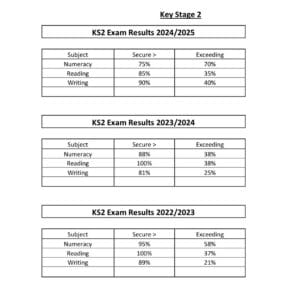
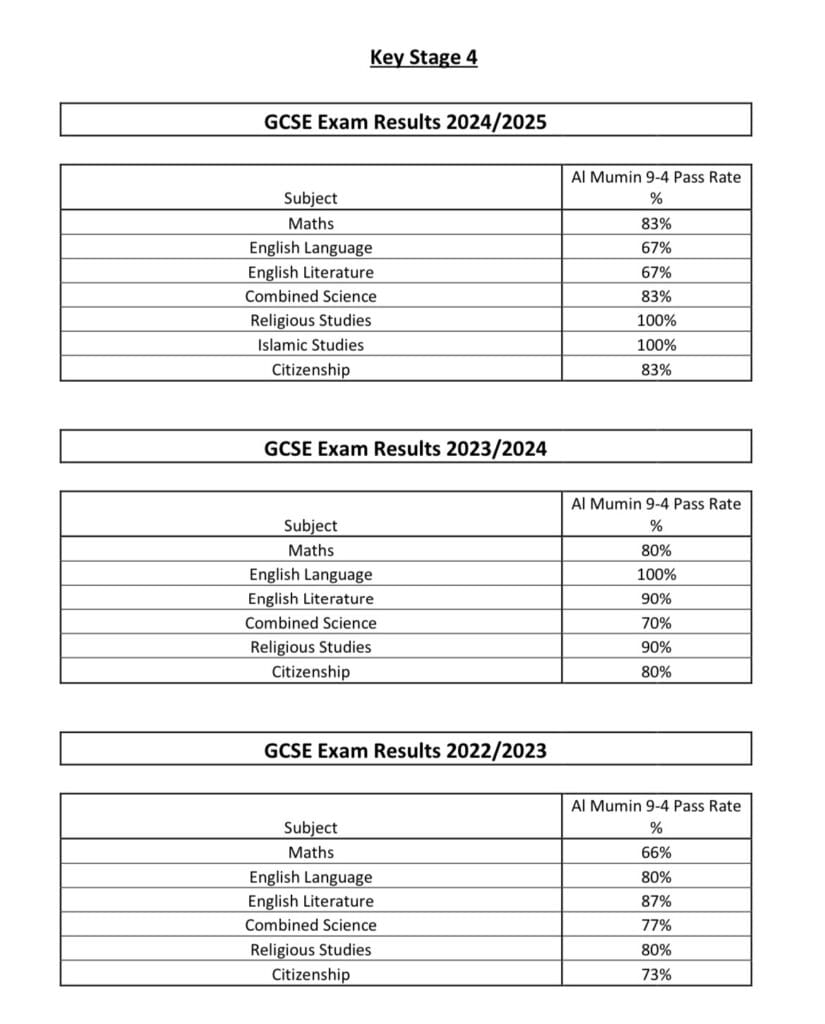
- Qualified, passionate educators dedicated to each child’s success
- Small class sizes for personalized attention
- Structured pathways to university and professional careers
We prepare students not only to pass exams — but to lead with knowledge and integrity.
? Strong Islamic Identity
We embed Islamic principles into daily school life, not just in the classroom. As an Islamic school inspired by the teachings of the Qur’an and Sunnah, we integrate faith into daily learning. Students develop and partake in:
- Tajweed Programme
Our Tajweed Programme is a central part of our Islamic provision, ensuring that students learn to recite the Qur’an correctly, confidently, and beautifully. Through structured lessons, pupils are taught the rules of pronunciation, articulation points (makharij), characteristics of letters, and the proper application of Tajweed rules. This enables them to preserve the accuracy and integrity of the Qur’anic text as it was revealed.
Beyond technical skill, the programme nurtures discipline, patience, and attention to detail. Students develop confidence in public recitation, strengthen their memorisation skills, and cultivate a deep respect and love for the Qur’an. Regular practice also enhances listening skills, concentration, and self-correction, encouraging students to strive for excellence. Ultimately, our Tajweed Programme supports both spiritual growth and personal development, helping pupils build a lifelong connection with the Qur’an grounded in precision, reverence, and understanding. - Confidence in Qur’an recitation and memorisation
Through regular guided practice, personalised feedback, and supportive small-group sessions, pupils strengthen their fluency, pronunciation, and rhythm. As their recitation improves, so does their self-confidence — enabling them to recite in assemblies, in prayer, and within the wider community with clarity and assurance.
Alongside this, we have a structured memorisation (Hifz) programme, where students memorise the entire Quran in sections or selected surahs and key passages in a consistent and manageable way. Lessons include daily revision (muraja’ah), new memorisation targets, and one-to-one listening sessions to ensure accuracy and retention. This process develops discipline, focus, perseverance, and a strong work ethic.
Together, confident recitation and memorisation nurture a deep love for the Qur’an, strengthen spiritual connection, enhance cognitive skills such as memory and concentration, and cultivate resilience. Our aim is for students not only to recite and memorise, but to carry the Qur’an in their hearts with confidence, understanding, and lifelong commitment.
? DEAR – Drop Everything & Read
Our Drop Everything and Read (DEAR) Programme begins each morning with the reading of the Qur’an in English translation across all year groups. This daily practice allows students to engage directly with the meanings and messages of the Qur’an, helping them build a personal and reflective connection with the words of Allah. Through consistent exposure to its guidance, students develop stronger faith, deeper understanding, and greater spiritual awareness. The programme nurtures critical thinking as students reflect on themes such as justice, patience, gratitude, and compassion, and consider how these values apply to their daily lives. It also strengthens literacy skills, vocabulary, and comprehension, while cultivating focus, discipline, and a calm start to the school day. Ultimately, this daily reading shapes students into thoughtful, principled individuals who are guided by the timeless teachings of the Qur’an both inside and outside the classroom.
? Islamic Curriculum
Our Islamic Curriculum at Key Stage 3 and 4 provides a broad and balanced foundation designed to nurture knowledgeable, confident, and principled young Muslims. It encompasses Fiqh, where students gain a clear understanding of the practical rulings related to the Five Pillars of Islam and how to apply them in daily life; Tareekh and Seerah, which explore key moments in Islamic history and the life and character of the Prophet Muhammad (peace be upon him), drawing timeless lessons in leadership, resilience, and faith; and Hadith and Aqa’aid, where students study the sayings of the Prophet ﷺ and strengthen their understanding of core Islamic beliefs. Together, these subjects ensure our students are spiritually grounded, morally upright, and well-equipped to live as thoughtful and responsible Muslims in modern society.
- Strong moral character (Adab & Akhlaq)
Adab and Akhlaq, focusing on the development of exemplary manners, integrity, and strong moral character. - Fiqh
This programme focuses on the study of traditional Islamic texts, taught in English or translated from Arabic. Pupils study the Hanafi school of thought in Fiqh (Islamic jurisprudence), with special emphasis on Fard al-‘Ayn knowledge — essential religious knowledge required of every morally responsible Muslim.
Fiqh, meaning “understanding,” is the science that explains how Muslims worship and live according to Islamic law. The programme aims to ensure students correctly understand Islamic creed (‘Aqidah) and properly fulfil Allah’s commands while avoiding prohibitions. Its broader goal is to nurture students who embody exemplary Islamic character in both belief and action.
Key areas of study include:
- Aqidah (Creed)
- Tahara (Purification) — wudhu, ghusl, tayammum
- Salah (Prayer) — integrals, sunnah acts, method of prayer, congregational prayer
- Special Prayers — Jumu‘ah, ‘Id prayers, Janazah, and optional prayers (Istikhara, Tasbih, Duha, Tawbah, Shukr, Awwabin, Ishraq)
- Islamic Living
- Sawm (Fasting)
- Zakat (Charity)
- Hajj (Pilgrimage)
- The Ihya — diseases and cures of the heart
- Daily Qur’an translation lessons
- Dhikr (Remembrance of Allah)
- Ihsan and Tarbiyyah (Spiritual development programme)
Overall, the programme combines jurisprudence, creed, worship, and spiritual refinement to develop well-rounded, practicing Muslims grounded in traditional Islamic scholarship. - Ihya Ulum ud-Deen (The Revival of the Religious Sciences)
Ihya Ulum ud-Deen, studied in our secondary school, is a classical work on Islamic spirituality that focuses on purifying the heart, strengthening faith, and refining character. Known as The Revival of the Religious Sciences, it is widely regarded as one of the most important works of Muslim scholarship and among the most read texts in the Muslim world after the Qur’an. Through its study, students deepen their understanding of worship, sincerity, self-discipline, and spiritual development. (Further detailed information can be read in our ‘Islamic Curriculum’ section) - Salah word to word translation
Our Salah Word-for-Word Translation Programme is designed to help students understand exactly what they are reciting in their daily prayers. By knowing the meaning behind their recitation, students move beyond memorisation to conscious worship. This deepens concentration (khushu’), strengthens their personal connection with Allah, and transforms Salah from a routine action into a meaningful conversation with their Lord. The programme nurtures spiritual awareness, sincerity, and mindfulness, helping students pray with understanding, presence, and heartfelt devotion.
?️ Parent Testimonials & Student Success Stories
At our school, the impact of our teaching and ethos is best seen through the experiences of those who know us best. Numerous parent testimonials and student success stories speak for themselves, reflecting the transformative journey our students undertake. Parents share how their children thrive academically, spiritually, and personally, while students celebrate their achievements, newfound confidence, and love of learning. These real-life stories highlight the dedication of our staff, the strength of our community, and the lasting difference a values-led, high-achieving education makes — providing reassurance that every child here is supported, challenged, and inspired to succeed.